Why we publish our methodology
Most skin analysis apps describe what they output and stay quiet about how. We think that is backwards. A skin score you cannot interrogate is a horoscope with a progress bar. So this page walks through the whole pipeline in the order it runs, names the places where it can go wrong, and lists the claims we have decided not to make.
It is written for a curious user, not a reviewer. If you want the general explanation of how selfie-based analysis works across the category, read how AI skin analysis works; if you want the honest answer to "how accurate is it", read that article. This one is specifically about Beeuty.
Step 1: the capture, and why it is most of the result
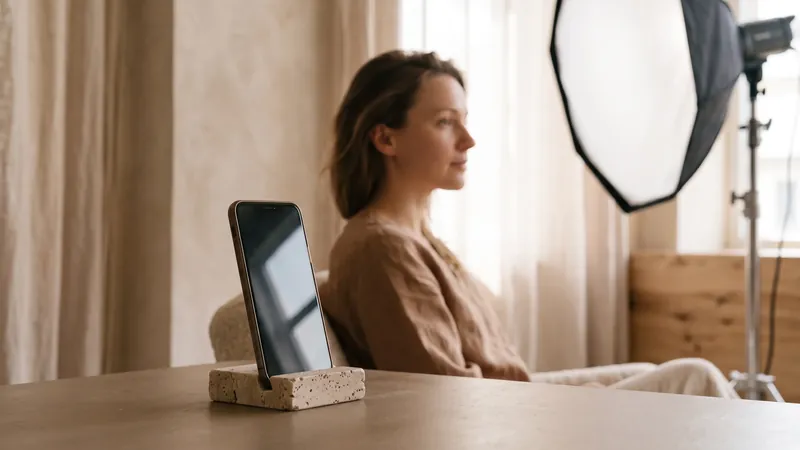
Everything downstream reads light reflected from the top layer of your skin. Change the light and you change the reading, regardless of the model. That is why Beeuty is camera-only: you cannot upload an old photo, and the guided camera does four things before a frame is accepted.
- Framing. An oval guide asks for the whole face, centred, at a fixed distance range. Distance changes how large pores and lines appear, so we constrain it.
- Orientation. The face should be roughly frontal and level. Strong tilt hides one cheek and exaggerates the other.
- Exposure sanity. Frames that are blown out or very dark are rejected with a prompt to move toward softer light.
- No filters, no beauty mode. The app reads from the raw camera stream. Smoothing filters erase exactly the texture the model is trying to see.
What the app cannot control is your bulb. Warm indoor light pushes tone toward red and reads as more redness; a single overhead light throws shadows into pores and reads as more texture. Our standing advice is the same as for any scan: face a window in daylight, same spot, same time of day, bare skin. The skin score guide explains how much a lighting change can move the number.
Step 2: the face is divided into zones
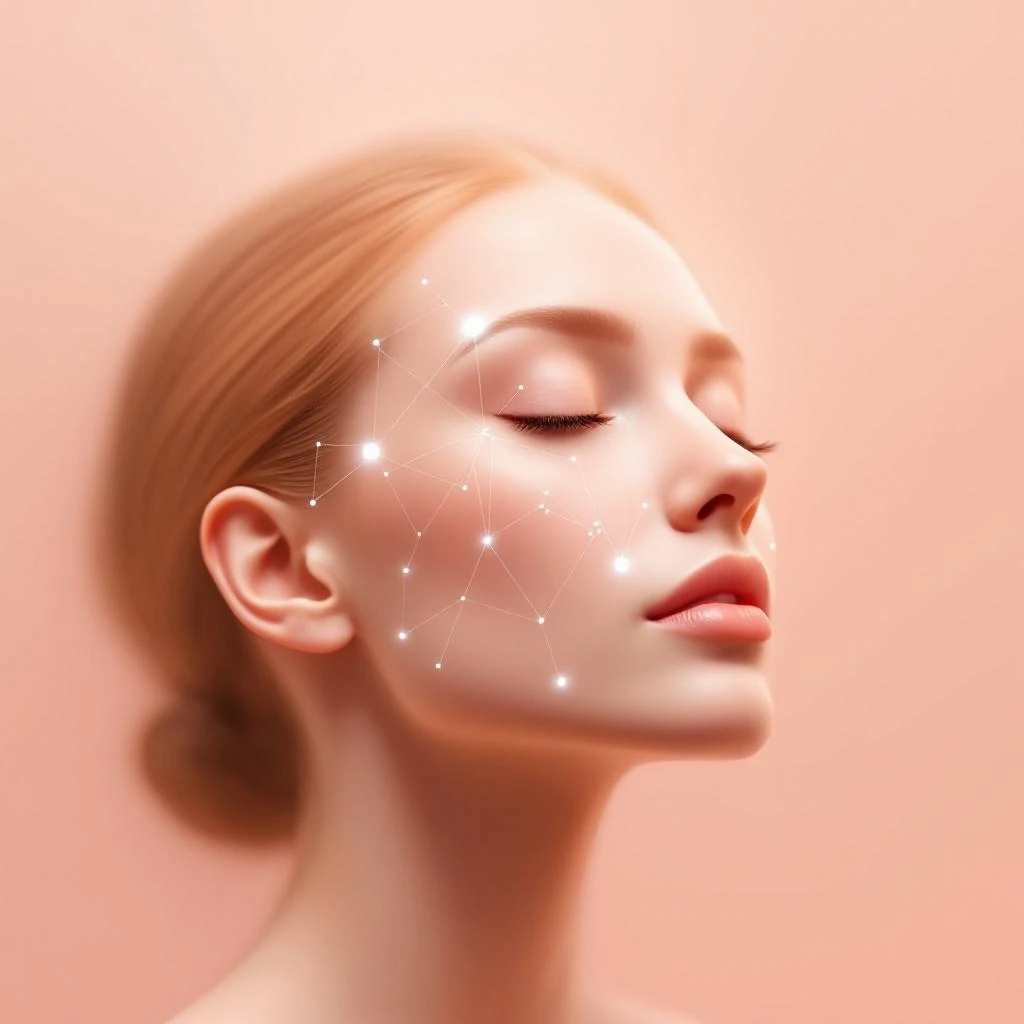
A computer-vision model locates facial landmarks and uses them to segment the face into regions: forehead, left and right cheek, nose, chin, and the area around each eye. Hair, eyebrows, lips, eyes and background are masked out so they do not count as skin.
Zoning matters for two reasons. First, concerns cluster: congestion lives on the nose and forehead, redness on the cheeks, lines around the eyes. Reporting a face-wide average would hide that. Second, it makes the output actionable: knowing redness is on the cheeks and not the chin changes what you do about it. The face mapping guide covers what zone patterns can and cannot tell you.
Step 3: six visible signals per zone
Within each zone the model estimates the following. Each is a measure of appearance in that photo, nothing more.
| Signal | What is actually measured | What it is a proxy for | Shown as |
|---|---|---|---|
| Texture | Local variation in surface brightness at fine scale | Roughness, bumps, visible pore pattern | Pores & texture |
| Tone evenness | Colour variation across the zone after masking blemishes | Dark spots, post-blemish marks, patchiness | Sun damage, dark spots |
| Blemish density | Count and clustering of small high-contrast spots | Active breakouts, comedones | Acne & blemish map |
| Redness | Diffuse shift toward red relative to the zone's base tone | Flushing, irritation, rosacea-like patterns | Redness |
| Line visibility | Length and depth of linear shadows in expected locations | Fine lines and wrinkles | Fine lines |
| Hydration cue | Dullness, flaking and micro-texture associated with dehydrated skin | Surface dehydration (inferred, not measured) | Hydration check |
Note what is absent. Oil production, barrier function, collagen, inflammation under the surface and the health of any individual spot are not on the list because a photo cannot measure them. Where one of our labels sounds like it might (hydration is the obvious one), the underlying signal is a visible proxy and we say so in the app.
Step 4: combining signals into a score, a skin age and a type
The 0–100 skin score (Skin Vibe Check) is a weighted combination of the six signals across zones. Two design choices shape it. Concerns that are both pronounced and widespread pull the score down more than small, isolated ones, so two blemishes on the chin cost less than diffuse redness across both cheeks. And the score is deliberately insensitive to features that are not concerns at all: freckles, beauty marks and natural skin tone are not penalised.
Glow Age (the skin age estimate) uses a different weighting: it leans on texture, tone evenness and line visibility, the signals that shift most predictably with age, and largely ignores blemishes. That is why a breakout can lower your score while barely touching your Glow Age. It is an estimate of how old the skin in the photo looks compared with typical patterns, not a biological age, and it is a trend to watch rather than a fact to accept. The skin age test explains the lifestyle factors behind the number.
Skin type and phototype are classified separately from the score. Type (oily, dry, combination, normal, with a sensitivity flag) is estimated from shine distribution, texture and redness across zones, and is the least certain of our outputs because one photo cannot see how your skin behaves over a day; the two-minute quiz is a useful cross-check. Phototype uses the Fitzpatrick scale and is estimated from base skin tone after white-balance correction; see the Fitzpatrick guide for why we treat it as a sun-response category, not an identity.
How we test it
We test for three properties, in this order of importance.
- Repeatability. The same face, same light, scanned twice a minute apart should land within a few points. This is the property that makes trends meaningful, and it is the one we spend most effort on. Guided capture exists because repeatability is mostly a capture problem.
- Sensitivity to real change. When a visible concern clearly changes over weeks (a breakout clearing, redness settling), the relevant zone signal should move in the right direction before the overall score does.
- Robustness to irrelevant change. Hairstyle, glasses removed, a different top, a small head tilt should not move the score much. Lighting is the known exception, which is why we constrain it rather than claim to be immune to it.
We do not publish a headline accuracy percentage. Claims like "95% agreement with dermatologists" depend entirely on the study design, the sample and the lighting, and without those they cannot be compared across apps, so repeating one of our own would be marketing dressed as science. What we can say is narrower and checkable by you: scan under fixed conditions and the number will be stable; change one thing in your routine and watch the relevant zone over eight to twelve weeks.
What we do not claim
- No diagnosis. Beeuty cannot tell acne from rosacea from an allergic reaction, and it does not assess moles or lesions. The comparison with a dermatologist draws the line in detail.
- No measurement under the surface. Hydration, barrier and oil are inferred from appearance.
- No comparison between people. Your score is calibrated to be stable for you, not to rank you against anyone else. Different cameras, rooms and faces make cross-person comparison meaningless.
- No medical device status. Beeuty is a cosmetic and educational tool. If a concern is persistent, painful, spreading or changing, the right next step is a professional, and the app says so.
- No immunity to bad photos. A dim, filtered or tilted scan produces a low-value result. We would rather tell you that than pretend otherwise.
Data, privacy and what happens to your photo
Analysis photos are kept for 30 days so you can compare scans side by side, then deleted. Results (scores, zone values, type, Glow Age) are kept so your history and trend remain available. Photos are not used to build advertising profiles and are not sold. The full detail is in the privacy policy, and the about page explains who builds Beeuty.
We keep this page current when the pipeline changes. If a step here no longer matches what the app does, that is a bug in the page and we want to hear about it.
How to get a read you can trust
- Face a window in daylight. Avoid overhead bulbs and warm lamps.
- Bare skin: no makeup, no sunscreen film, no filter.
- Same spot, same time of day, same distance every time. The guide helps; your habit does the rest.
- Scan every one to two weeks, not daily. Skin changes over weeks; daily swings are noise.
- Read the face map before the score. The number says something moved; the map says what.
- Change one thing at a time and give it eight to twelve weeks. The routine guide and the routine builder are built for exactly that cadence.
Sources
- AI Skin & Face Scanner: beeuty on the App Store, Apple App Store
- Beeuty privacy policy, Beeuty
See the method in action
Take one guided selfie and get a 0–100 score, Glow Age, skin type and a zone-by-zone face map, with the capture guidance described here built in. Free on iPhone and iPad.