What is a blackhead, exactly?
A blackhead is an open comedone: a pore whose opening has been plugged by a mix of sebum and dead skin cells that did not shed properly. Because the pore stays open, the top of the plug is exposed to air. The oil and the pigment within the dead cells oxidise and turn dark, in the same way a cut apple browns. The colour is not dirt, and no cleanser removes it, because the darkness is part of the plug itself.
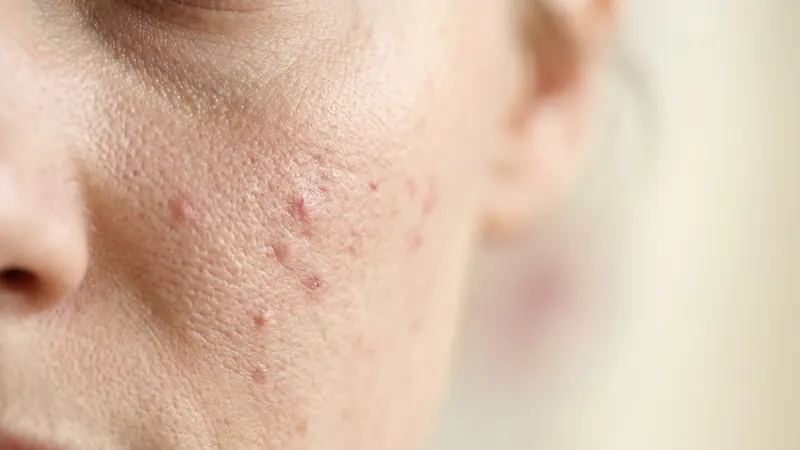
Blackheads are the mildest member of the acne family. They are non-inflammatory, which means no redness, swelling or pain, and they sit in the same four-step process that drives every other breakout: too much oil, cells that stick instead of shedding, bacteria, inflammation. A blackhead has only taken the first two steps. Left alone it may stay that way for months, drain on its own, or progress into a whitehead or an inflamed spot if bacteria get busy in the plug. The full picture of that process is in our acne guide.
They cluster where oil glands are densest and largest: the nose, the chin, the centre of the forehead, and often the ears and upper back. Oily and combination skin gets more of them, hormones increase them, and heavy, occlusive products encourage them. Genetics decides how sticky your dead cells are, which is why two people with the same routine have very different noses.
Blackheads vs sebaceous filaments: which do you actually have?
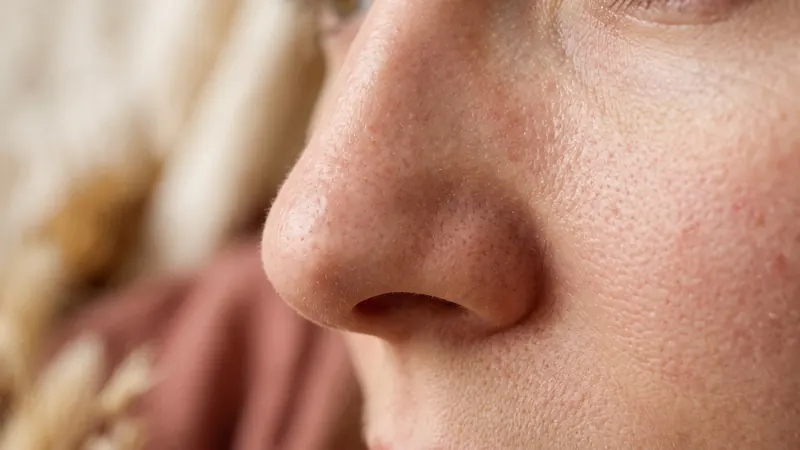
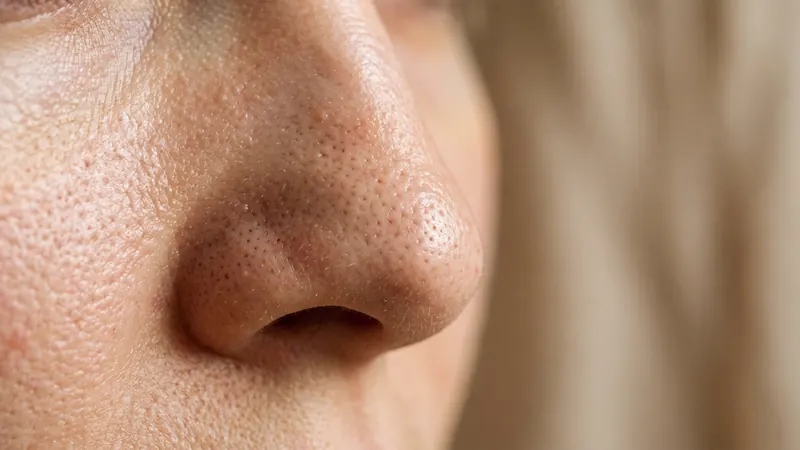
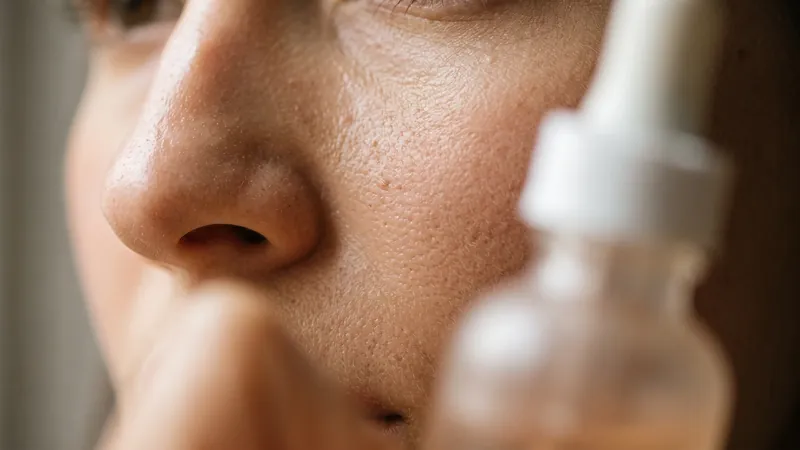
This is the question that saves the most money. Look closely at the grey dots across your nose. If they are small, uniform, evenly spaced, flat or very slightly raised, and grey-to-sandy rather than black, they are almost certainly sebaceous filaments, not blackheads. A sebaceous filament is the normal lining of an oil-rich pore: a thin column of sebum, dead cells and bacteria that helps oil travel to the surface. Every adult has them. They look darker on the nose because the pores there are larger and the filament is visible through the opening.
A true blackhead is a plug. It is larger than its neighbours, distinctly darker, often slightly raised, and sits in a pore that looks stretched around it. Blackheads are scattered rather than in a regular grid.
| Criteria | Sebaceous filament | Blackhead |
|---|---|---|
| Colour | Grey, sandy, yellowish | Dark brown to black |
| Pattern | Uniform, every pore on the nose | Scattered, individual pores |
| Size | Small, all similar | Larger than neighbouring pores |
| If squeezed | Thin waxy thread, refills in weeks | Firm plug with dark tip |
| Can it be removed for good | No, it is normal anatomy | Yes, with the right ingredients |
If you squeezed one and a soft, pale, waxy thread came out, that was a filament. It will be back in two to four weeks regardless of what you do, because the pore is simply producing oil. The realistic goal with filaments is to keep them less visible by managing oil and keeping the pore surface clear, which the same ingredients below achieve. The realistic goal with blackheads is to clear them and stop new ones forming. Knowing which you have resets your expectations, and your spending.
Why do squeezing and pore strips backfire?
Both give the same instant reward: something visible comes out. Both pay for it later.
Squeezing with fingers or nails applies uneven pressure that often pushes part of the plug deeper into the follicle rather than out of it. The pore wall can rupture under the skin, which turns a quiet blackhead into an inflamed papule. Fingers add bacteria, nails add micro-cuts, and repeated squeezing on the nose stretches the pore permanently and leaves tiny red marks or broken capillaries that outlast the blackhead by months.
Pore strips work like wax: an adhesive dries, bonds to whatever is on the surface and rips it off. They remove the oxidised tips of blackheads, the tops of sebaceous filaments, fine hair and the outermost layer of skin cells. The plug beneath the tip stays, the follicle refills within days, and the stripped surface is more reactive and more prone to dryness. People with rosacea, thin or sensitive skin, or who are using retinoids, can lose skin rather than plugs. The strip looks dramatic because it is covered in filaments you were always going to have.
Neither method changes the two things that cause blackheads: how much oil the pore makes and how cleanly the cells inside it shed. Ingredients that do change those are slower, far less satisfying and the only approach that lasts.
What actually removes blackheads?
A short list, used consistently, beats a long list rotated weekly.
- Salicylic acid (BHA). The first-line ingredient for blackheads because it is oil-soluble, so it travels into the pore and dissolves the plug from inside rather than polishing the surface. A leave-on product at 0.5–2% used once a day, or every other day to start, is the standard. Cleansers help less because they rinse off before they can work. Our salicylic acid guide covers strengths and pacing.
- A retinoid. Adapalene, retinol or a prescription retinoid normalises how cells shed inside the follicle, so plugs stop forming. This is the long-game ingredient and the one that prevents new blackheads rather than clearing old ones. Start two or three nights a week and build up; the retinol beginner's guide explains how to avoid the dry, flaky phase.
- Clay, occasionally. A clay mask once a week on the nose and chin absorbs surface oil and can make filaments less visible for a few days. It is a nice extra, not a treatment, and daily use strips the skin and increases oil production.
- A non-comedogenic moisturiser. Counter-intuitive but essential. Skin that is dried out by acids and retinoids compensates with more oil and sheds less evenly, which makes congestion worse. A light, gel or lotion-texture moisturiser keeps the barrier intact so the actives can keep working.
- Niacinamide. A supporting ingredient that moderates sebum output and sits well alongside the two above. Details in the niacinamide guide.
- Consistency. The most underrated item. Blackheads form over weeks and clear over weeks. A routine you keep for two months beats one you perfect and abandon.
Pick salicylic acid or a retinoid to start, not both on the same night, and add the second only once your skin is comfortable. If you have oily skin all over rather than just a congested T-zone, the oily skin routine builds the full day.
How long does it take to clear blackheads?
Six to eight weeks for a visible difference, closer to twelve for the full effect. Here is roughly what to expect.
- Weeks 1–2. Little change. Skin may feel drier. If you started a retinoid, some people see a temporary increase in small bumps as deeper plugs are pushed to the surface. This is the stage most people quit at.
- Weeks 3–5. Existing blackheads start to loosen. Some drain on their own in the shower. The nose feels smoother to the touch before it looks different.
- Weeks 6–8. Fewer dark plugs, pores look less stretched, and new blackheads form more slowly. Sebaceous filaments are still there, as they always will be, but lighter.
- Week 12 onwards. Maintenance. Most people can drop to every other night and hold the result. Stop entirely and congestion returns over one to two months, because the pore has not changed its nature.
A short-lived increase in small bumps in the first two to four weeks of a retinoid or acid, in the areas where you normally get congestion, is purging and usually settles. New spots in places you never break out, or red, itchy, stinging skin, is irritation. Cut the frequency, add moisturiser and if it does not calm within a week, stop and reassess.
When does a dermatologist extraction make sense?
Professional extraction is the one form of squeezing that is worth considering. A dermatologist or trained aesthetician uses a sterile comedone extractor that applies even pressure around the pore, after prepping the skin so the plug lifts cleanly. It removes stubborn, long-standing blackheads in one session without the collateral damage of fingers or strips. It makes sense when you have a handful of large, deep blackheads that have not shifted after eight weeks of topical treatment, when you are about to start a retinoid and want a clean slate, or when blackheads are mixed with inflamed spots and you need a wider acne plan. It does not make sense for sebaceous filaments, which refill within weeks, or as a substitute for daily ingredients.
See a dermatologist sooner if your congestion is accompanied by painful, deep lumps, if blackheads are leaving dark marks or pitted scars, or if two to three months of a sensible salicylic acid or retinoid routine has made no difference. Prescription-strength retinoids and other options are a different weight class. Our app versus dermatologist page sets out where self-care ends and professional care begins.
How Beeuty reads blackheads and congestion from a selfie
Beeuty's Pore & Texture analysis looks at how visible your pores are zone by zone, and the Acne & Blemish Map plots visible blemishes across the face. Together they show where congestion clusters, usually the nose, chin and central forehead, how dense it is compared with the rest of your face, and, because every scan is saved, whether it is thinning out as the weeks pass. That trend is the most useful thing the app can give you for blackheads, since progress over six to eight weeks is almost impossible to judge honestly in a bathroom mirror.
The limits matter. A selfie, even in the app's guided camera, does not resolve individual pores well enough to tell a blackhead from a sebaceous filament; the pinch-and-look test in daylight does that, not image analysis. The app measures the visibility of pores and the presence of blemishes, not what is inside them. Oily shine, heavy make-up and flash lighting all change what the camera sees, so scan clean-faced in soft, even light each time. Beeuty estimates appearance and never diagnoses; it will not tell you whether your congestion is acne, and it will not replace a dermatologist for anything painful or scarring. If you are using the Routine Builder, the pore and blemish readings feed into its suggestions, and the Ingredient Guide covers salicylic acid, retinoids and niacinamide in more depth.
Sources
- Acne: Who gets and causes, American Academy of Dermatology
- How to treat different types of acne, American Academy of Dermatology
- Acne, NHS
- Acne: Treatment, NHS
See where congestion clusters and whether it is clearing
Beeuty's Pore & Texture analysis and Acne & Blemish Map show your congestion zones from one selfie and track them across the six to eight weeks it takes to clear. Free on iPhone and iPad.