April 2026 on the App Store, as “AI Skin & Face Scanner: beeuty”.
iPhone and iPad, iOS 16.4 or newer. No Android version yet.
Burak Tahtacı, an independent developer, with a small team behind the skincare content.
Not a medical device. Beeuty estimates how skin looks in a photo; it does not diagnose or treat.
What Beeuty does
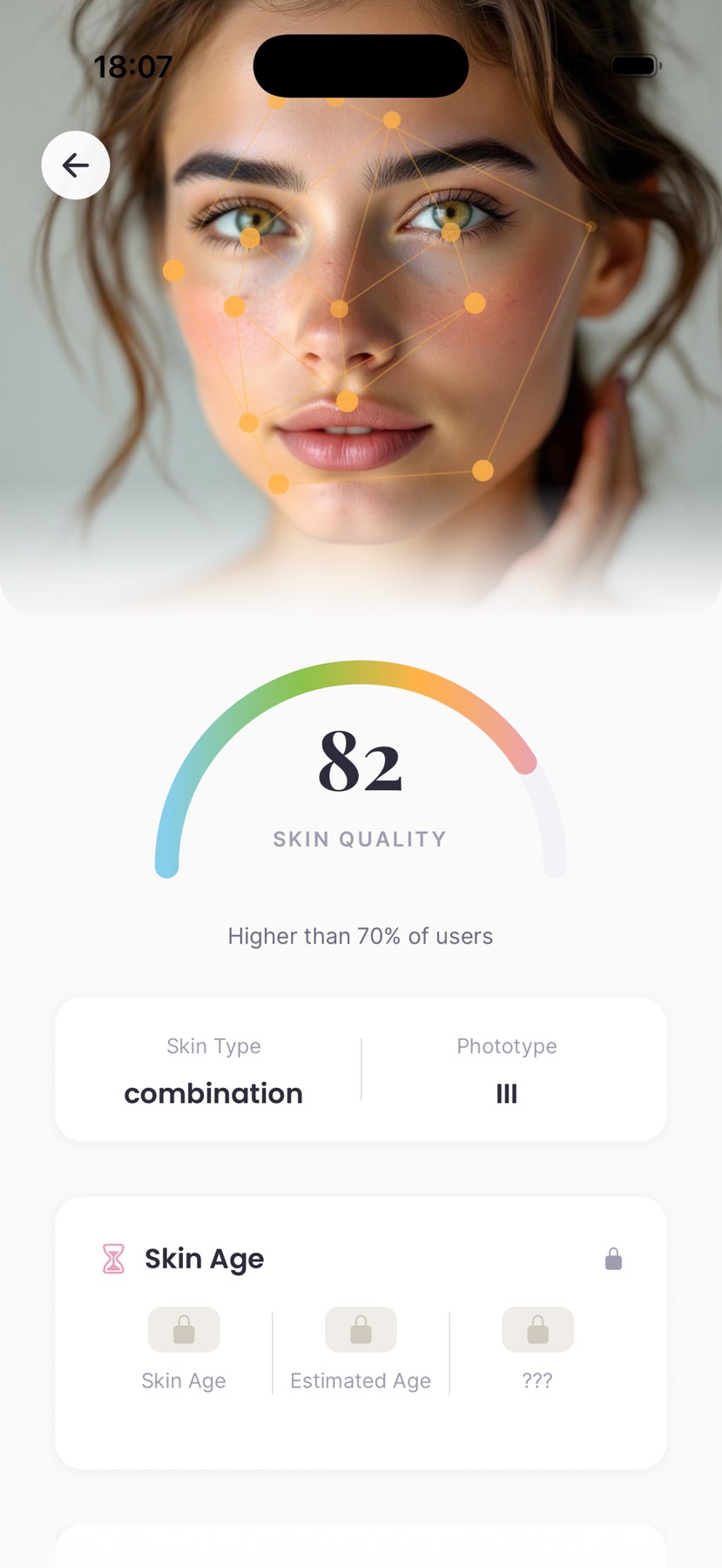
You take a selfie inside the app, framed by an on-screen guide so lighting and distance stay consistent. From that one photo Beeuty runs 13 analyses: an overall skin score from 0 to 100, an estimated skin age we call Glow Age, your skin type and Fitzpatrick phototype, and a face map that marks where visible concerns cluster, such as blemishes, pores and texture, fine lines, sun damage and dehydration cues. It then builds a routine and an ingredient guide around what it found, and lets you retake monthly to see the trend.
How the analysis is produced
Two steps happen on our servers. First, landmark detection (Google MediaPipe Face Mesh) outlines facial regions, the forehead, cheeks, nose, chin, eye areas and T-zone, so every measurement is tied to a region rather than to the whole image. Second, a vision-language model reads the photo together with those regions and the skin profile you entered during onboarding, and returns structured estimates: visible texture, tone evenness, blemish density, redness, oil shine, line patterns. Those estimates become the score, the face map and the routine. The model is run by a third-party processor (currently xAI Corp.) under the terms in our privacy policy.
Because the input is a photo, the output is an estimate of appearance. Lighting, white balance, makeup and camera distance all move the numbers, which is why the app guides the capture and why we recommend comparing retakes taken under the same conditions. Our guide on how accurate AI skin analysis is goes through what a selfie can and cannot tell you.
What happens to your selfie
- The uploaded image is stored in a Google Cloud Storage bucket in the United States, scoped to your account and readable only by it.
- It is shared only with the processors needed to produce the analysis, and only for that purpose.
- The image itself is deleted within 30 days. The landmark coordinates and measurements stay with your report until you delete your data, so past reports keep working.
- Photos are never sold and never used for advertising.
The full details, including how to delete everything, are in the privacy policy.
How we write the guides
The skincare guides, skin type and skin concern pages are written by the Beeuty team and reviewed against current dermatology consensus before publishing. Our rules:
- Cosmetic, not clinical. We explain what is visible and what helps it look better. Anything that could be a medical condition gets a “see a dermatologist” line, not a treatment plan.
- No sponsored content, no affiliate links. We do not name or recommend specific products in exchange for payment, and no brand pays to appear in an analysis.
- Honest timelines. Skincare works on 8–12 week cycles. We say so instead of promising overnight results.
- Dated and maintained. Every guide carries its publish and update dates. When evidence or the app changes, the guide changes.
- Ten languages, written natively. Each language version is adapted by a fluent writer rather than machine-translated word for word.
How Beeuty makes money
The app is free to download and the core analysis is free to try. Optional PRO features are sold as in-app subscriptions through Apple. That is the only revenue: we do not sell data, run ads inside the app, or take commissions on products.
Contact and press
Questions, corrections, partnership or press requests: [email protected]. The app icon is available at /favicon-192.png and a product screenshot at /assets/app-analysis.jpg; both may be used in coverage of Beeuty. Please refer to the product as “Beeuty” (one word, double e).