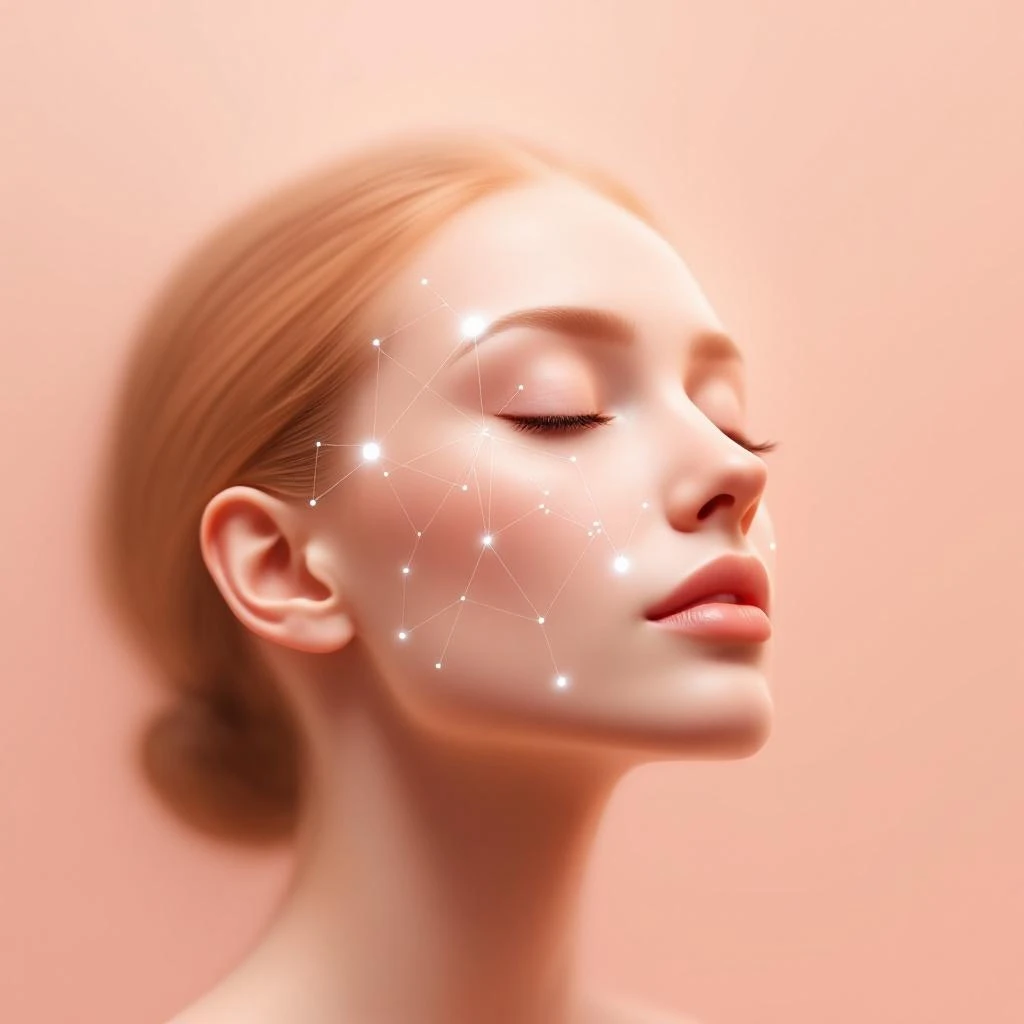
What does the Skin Vibe Check measure?
The analysis reads your selfie across the dimensions that make up how skin looks: shine and oil signals (where and how strongly light reflects), texture (smoothness versus visible roughness and pores), tone evenness (redness and dark-spot patterns), visible blemishes, and hydration signals (dullness, micro-lines). Each dimension is scored, and together they roll up into your overall skin score from 0 to 100.
Alongside the score you get a skin type estimate — oily, dry, combination, sensitive-leaning, or normal — and a Fitzpatrick phototype estimate (I–VI), the standard scale for how skin responds to sun, which helps frame sun-care advice for your tone.
The face map: seeing where the score comes from
A single number can't tell you that your forehead is oily while your cheeks are parched. The face-map overlay can: each detected signal is plotted on the zone it came from, so combination patterns, cheek redness, and nose congestion all show up exactly where they live. It's the difference between a grade and marked homework — and for combination skin especially, the map is the main event.
How should I read my score?
Two rules. First, the number is a snapshot of how your skin photographs today — sleep, hydration, hormones, and lighting all move it a few points. Don't read a single check as a verdict. Second, the trend is the product: the same algorithm scoring the same face monthly turns "I think my skin's improving" into a line you can look at. Score dips also have diagnostic value — a drop concentrated in the hydration dimension after a week of new actives is your barrier filing a complaint.
What the score is not: a beauty rating, a comparison to other people, or a medical assessment. It's your face versus your face, over time.
Getting an accurate check
- Light: face a window in daylight; avoid overhead bathroom lighting, which paints false shadows and shine.
- Skin: bare — no makeup, no filters, ideally an hour after cleansing so your natural oil pattern shows.
- Consistency: same light, same time of day for tracking checks, so changes come from your skin rather than your bathroom.
From here, the Routine Builder turns your results into a routine, and the other twelve analyses go deeper on individual dimensions.
Run your first Vibe Check
One selfie: score, type, phototype, face map. Free to try, and your baseline for everything that follows.
Download on the App Store