What does uneven skin texture actually mean?
When people say their skin is textured, they usually mean it is not smooth in a way they can see in side light or feel with a fingertip. That covers at least six distinct things, and the word hides the fact that they have almost nothing in common beyond the surface they disturb.
- Closed comedones. Small, skin-coloured bumps with no visible opening, made of oil and dead cells trapped under a thin layer of skin. They cluster on the forehead, chin and jaw and are the most common cause of a bumpy face. Their open cousins are blackheads.
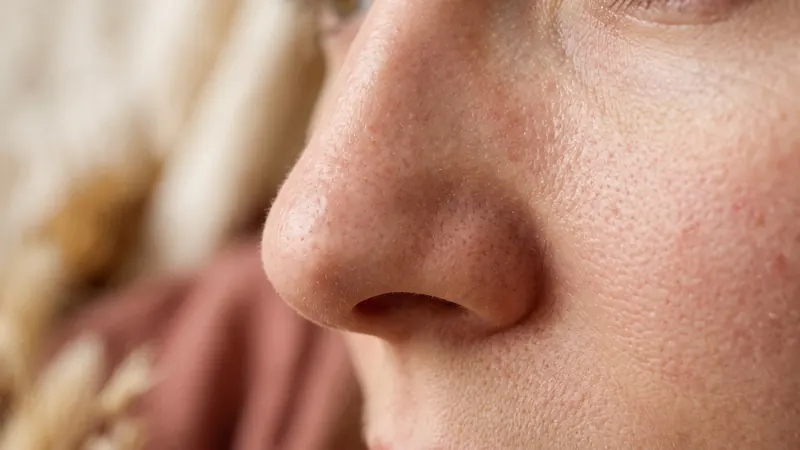
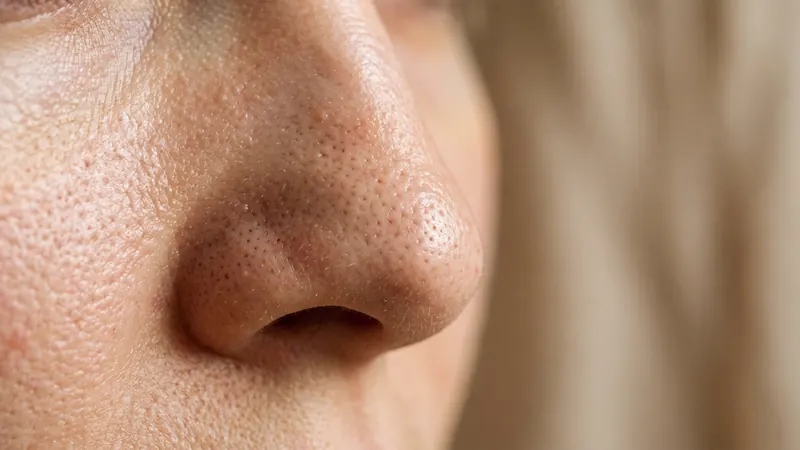
- Enlarged pores. Follicle openings stretched by oil and loosened by collagen loss. Most visible on the nose and inner cheeks. Covered in depth in our pores guide.
- Rough patches. Dry, flaky or slightly scaly areas where dead cells are building up unevenly, often on the cheeks and around the nose in winter.
- Acne scarring. Permanent changes in the skin's structure after inflamed breakouts: shallow rolling dips, sharper boxcar depressions and narrow ice-pick pits. These are not bumps but holes, and they catch shadow.
- Keratosis pilaris on the face. The same harmless condition that gives many people rough upper arms can appear on the outer cheeks, as tiny dry bumps that feel like fine sandpaper, sometimes with a pink background.
- Milia. Tiny, hard, pearly white cysts of trapped keratin, usually around the eyes and on the cheekbones. They look like whiteheads and are nothing like them.
Everything that follows depends on which of these you are looking at, so the next section is the one not to skip.
How do I tell which kind of texture I have?
Two questions do most of the work: what does it feel like, and where is it. Comedones are soft and slightly raised in the oily zones. Milia are hard, do not move, and sit where skin is thin. Keratosis pilaris feels dry and gritty across an area rather than as individual bumps. Scars are depressions, so they disappear under frontal light and reappear in side light. Rough patches flake if you rub them.
| Criteria | Closed comedones | Milia | Keratosis pilaris | Rough patches | Acne scars |
|---|---|---|---|---|---|
| Feel | Soft, slightly raised | Hard, like a grain of sand under skin | Dry, gritty across an area | Flaky, sometimes tight | Flat or dipped, not raised |
| Look | Skin-coloured bumps, no opening | Pearly white dots, 1–2 mm | Tiny bumps, often pink background | Dull, scaly, uneven colour | Shadows that move with the light |
| Where | Forehead, chin, jawline | Around eyes, cheekbones | Outer cheeks, sometimes temples | Cheeks, sides of nose, around mouth | Cheeks, temples, wherever acne was |
| Skin type | Oily or combination | Any | Often dry | Dry or dehydrated | Any, more common after cystic acne |
| Best first step | Salicylic acid | Professional extraction | Lactic acid or urea plus moisturiser | Hydration, then gentle AHA | Retinoid, then a dermatologist |
If what you have is red, sore or spreading, it may be none of these. Inflamed acne, rosacea, fungal folliculitis and contact reactions can all present as bumps and belong in the acne or redness conversations, or with a dermatologist, rather than in a texture routine.
How to improve skin texture: what works for each type
Closed comedones: salicylic acid. It is oil-soluble, so it travels into the pore and loosens the plug from inside. A 1–2% leave-on product used on alternate nights, built up to nightly if tolerated, clears most congestion over two to three months. Our salicylic acid guide covers formats and frequency. Niacinamide alongside helps moderate the oil that forms new plugs.
Turnover and scarring: retinoids. Adapalene or retinol normalises how cells shed, so comedones stop forming, and over months encourages the collagen remodelling that softens shallow rolling scars. Deeper boxcar and ice-pick scars do not respond meaningfully to anything you can buy; those are treated in clinic with procedures such as microneedling, resurfacing or filler, and a dermatologist will tell you which. Start retinoids slowly; the beginners guide explains how.
Roughness and keratosis pilaris: lactic or mandelic acid. These gentler alpha hydroxy acids loosen the build-up that makes skin feel like sandpaper while being kinder to the barrier than glycolic acid. For keratosis pilaris on the cheeks, a lactic acid or urea moisturiser used daily manages the bumps; it does not cure them, and scrubbing makes them angrier. Details are in our AHA exfoliants guide.
Milia: nothing topical, see a professional. Milia are sealed cysts with no opening, so acids do not reach them and squeezing damages the skin around them without releasing anything. A dermatologist or trained aesthetician removes them in seconds with a sterile needle or lancet. Retinoids may reduce how often new ones form, and avoiding heavy eye creams on milia-prone skin helps.
Texture with stinging: barrier repair first. If rough, bumpy skin also stings when you apply plain moisturiser, your barrier is compromised and every active above will make it worse. Pause acids and retinoids, use a bland ceramide moisturiser for two to four weeks, then reintroduce one active at a time. The barrier repair guide has the full sequence.
What makes skin texture worse?
Three habits account for most self-inflicted texture.
Over-exfoliation. Using a scrub, an acid toner, an acid serum and a retinoid in the same week is common and it strips the barrier. The skin responds with inflammation, more flaking, more congestion and sometimes small red bumps that look like a new problem. Pick one exfoliating active and use it two or three times a week.
Picking. Squeezing closed comedones pushes contents deeper and turns a bump that would have cleared in weeks into a mark or a pit that lasts months. Picking milia leaves a wound and the milium stays. Picking at flaky patches tears skin that was shedding on schedule.
Heavy occlusives on congested zones. Thick balms and rich creams are excellent on a dry cheek and a reliable way to seal new comedones into an oily forehead or chin. Zone your routine: lighter textures where you are congested, richer ones where you are rough.
Post-acne marks and healing scars darken under ultraviolet light, and darker scars read as more texture because they cast stronger visual shadow. Daily SPF does not smooth anything, but it stops texture from looking worse while you treat it. See the sunscreen guide for choosing one that will not add to congestion.
How long does it take, and when should you see a dermatologist?
Realistic timelines, assuming consistent use and no picking:
- Rough patches: two to four weeks of hydration and gentle exfoliation.
- Closed comedones: six to twelve weeks on salicylic acid or a retinoid. Weeks two to four can look worse as plugs surface.
- Keratosis pilaris: noticeable improvement in four to eight weeks, and it returns within weeks if you stop. It is a long-term management habit, not a cure.
- Enlarged pores: visibly finer in eight to twelve weeks; never gone, because pores are permanent.
- Shallow acne scars: six months or more on a retinoid for modest softening. Deeper scars do not change without procedures.
- Milia: some resolve on their own over months; many do not, and extraction is a five-minute appointment.
See a dermatologist when bumps are painful, itchy, spreading or bleeding; when texture appeared suddenly or changed character; when you have done one sensible routine for three months and lost ground; when you want scarring treated properly rather than softened; or when you simply cannot tell what you are looking at. Diagnosis by photo, including by an app, is guesswork compared with a clinician looking at your face under magnification, and a correct name saves months of treating the wrong thing. Our comparison of Beeuty and a dermatologist visit is honest about where each belongs.
How Beeuty reads texture from a selfie
Beeuty's Pore & Texture analysis estimates surface uniformity for each zone of the face map: forehead, nose, cheeks, chin. It does this by reading how evenly light moves across the skin in the photo. A smooth, hydrated surface produces soft, continuous highlights; comedones, flaking, enlarged pores and scarring each break that continuity into small bright-and-dark patterns, and the analysis scores how much of that disruption it finds per zone. The result is stored with every scan, so you can see whether the forehead that was congested in September reads smoother in November, which is a timescale the mirror is bad at.
What it cannot do is name the bump. The analysis reads unevenness; it does not distinguish a closed comedone from a milium, or keratosis pilaris from a dry patch, with any reliability, because from a phone camera at arm's length they look similar. Use this page and your fingertips to identify what you have, use Beeuty to measure whether your routine is changing it, and use a dermatologist when the two disagree or when anything hurts.
Texture is also the most lighting-sensitive measurement in the app. Harsh side light exaggerates every bump by lengthening its shadow; soft frontal daylight is fair; makeup fills the very texture being measured and will flatter the score. For readings you can compare, face a window with bare skin, keep the phone at eye level and use the same spot each time. Compare month to month, not day to day, because a single scan in different light tells you about the light. Beeuty estimates how skin looks in cosmetic terms; it is not a medical device and does not diagnose.
Sources
- Acne scars: diagnosis and treatment, American Academy of Dermatology
- Keratosis pilaris: overview, American Academy of Dermatology
- Keratosis pilaris, NHS
- How to safely exfoliate at home, American Academy of Dermatology
Measure texture zone by zone, not by feel
Beeuty estimates surface uniformity for each area of your face from one selfie and tracks whether your routine is smoothing it month by month.