
What does dull skin actually mean?
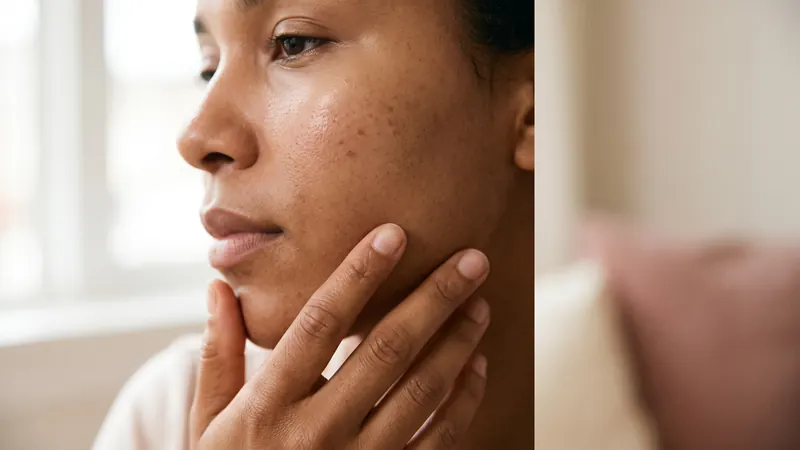
Dullness is not a condition. It is what you call skin that is not reflecting light the way you expect it to. Healthy, hydrated skin with a smooth surface and even colour bounces light back in a fairly orderly way, which the eye reads as brightness or glow. Skin that looks dull is scattering that light instead, and there are four physical reasons it does so.
Dead-cell build-up. The outermost layer of skin is made of flattened cells that are meant to shed on a schedule. When they linger, the surface becomes a loose, uneven mosaic that diffuses light rather than reflecting it, a little like frosted glass next to clear glass.
Dehydration. Water-poor surface cells shrink and stiffen. The skin loses the slight plumpness that creates soft highlights across the cheekbones and forehead, and fine crinkling appears where the surface has lost its tension.
Micro-texture. Congestion bumps, flaking, enlarged pores and post-blemish unevenness each cast tiny shadows. Individually they are invisible; together they make a surface look matte and tired.
Uneven tone. Patches of pigment, redness and the sallow cast that comes with poor sleep or smoking break up the colour field of your face. Even a perfectly smooth surface reads as dull when its colour is blotchy, because the eye uses evenness as a proxy for health.
Most people complaining of dullness have at least two of these going on, which is why one product rarely fixes it. If your skin also feels tight and shiny at the same time, read our guide to dehydrated skin first, because that is often the whole story.
Why does my skin look dull? The five causes
- Dehydration. Central heating, air conditioning, long flights, foaming cleansers, alcohol and simply not moisturising all pull water out of the surface layer. Dehydrated skin is the fastest cause to create and the fastest to reverse.
- Slow turnover. Cell renewal slows with age and in winter, and it slows further when skin is inflamed or under-slept. The result is that top layer of overstayed cells. This is the cause that exfoliation addresses, and the only one it addresses.
- Sun damage. Ultraviolet exposure thickens the outer layer, triggers patchy pigment and breaks down the collagen that keeps skin smooth. Sun-related dullness builds slowly and is the most stubborn to undo, which is why our sunscreen guide treats SPF as a glow product rather than a chore.
- Sleep and stress. Short or poor sleep shows on the face quickly: paler, flatter skin and darker under-eye shadow. A small clinical study found that self-described poor sleepers showed more signs of intrinsic skin ageing and recovered their barrier more slowly after it was disrupted. Stress hormones also nudge oil production and inflammation, both of which roughen the surface.
- Smoking and alcohol. Smoking narrows the small blood vessels that feed skin and accelerates collagen loss, producing the greyish, sallow cast that is hard to mistake for anything else. Alcohol dehydrates and, for many people, flushes, so skin alternates between blotchy and flat.
A quick way to triage: if your skin looks dull by evening but fine after moisturising, suspect dehydration. If it is dull in the morning and rough to the touch, suspect turnover. If it is uneven in colour under daylight, suspect sun. If it is dull after a bad week, suspect sleep.
How do you get glowing skin? What actually helps
None of this is exotic, which is rather the point.
- Gentle exfoliation, one to three times a week. A low-strength alpha hydroxy acid such as lactic or glycolic acid dissolves the bonds holding dead cells in place without the micro-tears a scrub can leave. Start once a week, move to twice if your skin is comfortable, and stop at three. Daily exfoliation is where glow routines go wrong. Our AHA exfoliants guide covers strengths and frequency.
- Hydration in layers. Apply a humectant serum, typically hyaluronic acid or glycerin, to damp skin, then seal it with a moisturiser. In dry weather add a richer cream or a thin occlusive layer at night. This is the single change that improves dullness fastest.
- Vitamin C in the morning. An antioxidant that helps even out tone and defends against the daily oxidative stress that makes skin look tired. Pair it with sunscreen; see the vitamin C serum guide for choosing a stable form.
- Niacinamide. Supports the barrier, moderates oil and gradually evens tone. It sits comfortably alongside almost everything else, which is why it appears in most sensible routines.
- Sunscreen every day. Not because it produces glow, but because it stops the pigment and thickening that remove it. Without it, every other step is treading water.
- Sleep. Seven to nine hours is the recommendation for adults and no serum compensates for its absence. If dullness coincides with a run of short nights, the fix is not in a bottle.
If your skin stings when you apply any of these, your barrier is compromised and exfoliation should wait. Read skin barrier repair and come back to the acids in a few weeks.
Glass skin and glow myths worth dropping
Glass skin is a look, not a skin state. The poreless, wet-looking finish in those photos is soft frontal lighting, dewy makeup, favourable genetics and, often, a filter. Real skin has pores and texture, and skincare can make it smoother and more even, but it cannot make it look like glass. Chasing the photo leads to over-exfoliation, which produces tight, inflamed, flatter skin, the opposite of what was wanted.
Products that glow are not making your skin glow. Many radiance creams and primers contain fine reflective minerals. They sit on the surface and bounce light. That is cosmetics doing its job, and there is nothing wrong with it, but it washes off and changes nothing underneath.
More exfoliation is not more glow. There is a point, usually around two sessions a week, after which additional exfoliation removes cells that were still doing a job. Past that point skin becomes shiny in a tight, irritated way that people sometimes mistake for radiance for a few days before it turns red.
Drinking more water will not fix surface dehydration by itself. Hydration from the inside matters for general health, but the top layer of skin loses water to the air, and that loss is managed by humectants, moisturisers and a healthy barrier, not by a sixth glass.
The post-facial glow is temporary. A facial exfoliates, massages and often steams, which brings blood to the surface and clears the top layer. It looks wonderful for two or three days. The maintenance routine above is what makes it last.
How long does it take to get your glow back?
Different causes resolve on different clocks, and knowing which one you are waiting on stops you abandoning a routine that is working.
- One to three days. Hydration layering and a single gentle exfoliation. If dullness was mostly dehydration and build-up, you will see the difference almost immediately.
- Two to four weeks. A full cell-turnover cycle on a sensible exfoliation schedule. Surface roughness and the morning-dull look improve here.
- Eight to twelve weeks. Vitamin C and niacinamide working on tone evenness. This is also when consistent sleep and less alcohol show up as a steadier baseline rather than a good-day, bad-day pattern.
- Several months. Sun-related pigment and thickening fade slowly, and only if you are wearing sunscreen daily in the meantime. Progress here is best judged in monthly photos, not the mirror, which is what a tracked skin score is for.
A note on when dullness is not a skincare matter. A yellowish or grey cast that appears over weeks, persistent pallor with tiredness, or a change in skin colour you cannot link to anything in your routine deserves a conversation with a GP, because iron, thyroid and liver issues can all show on the face before they show anywhere else. Skincare cannot address those and should not be asked to.
How Beeuty reads radiance from a selfie
Beeuty does not have a single dullness score, because dullness is not a single thing. Instead the analysis reads three cues that together make up what you would call glow, and shows you which one is pulling your result down.
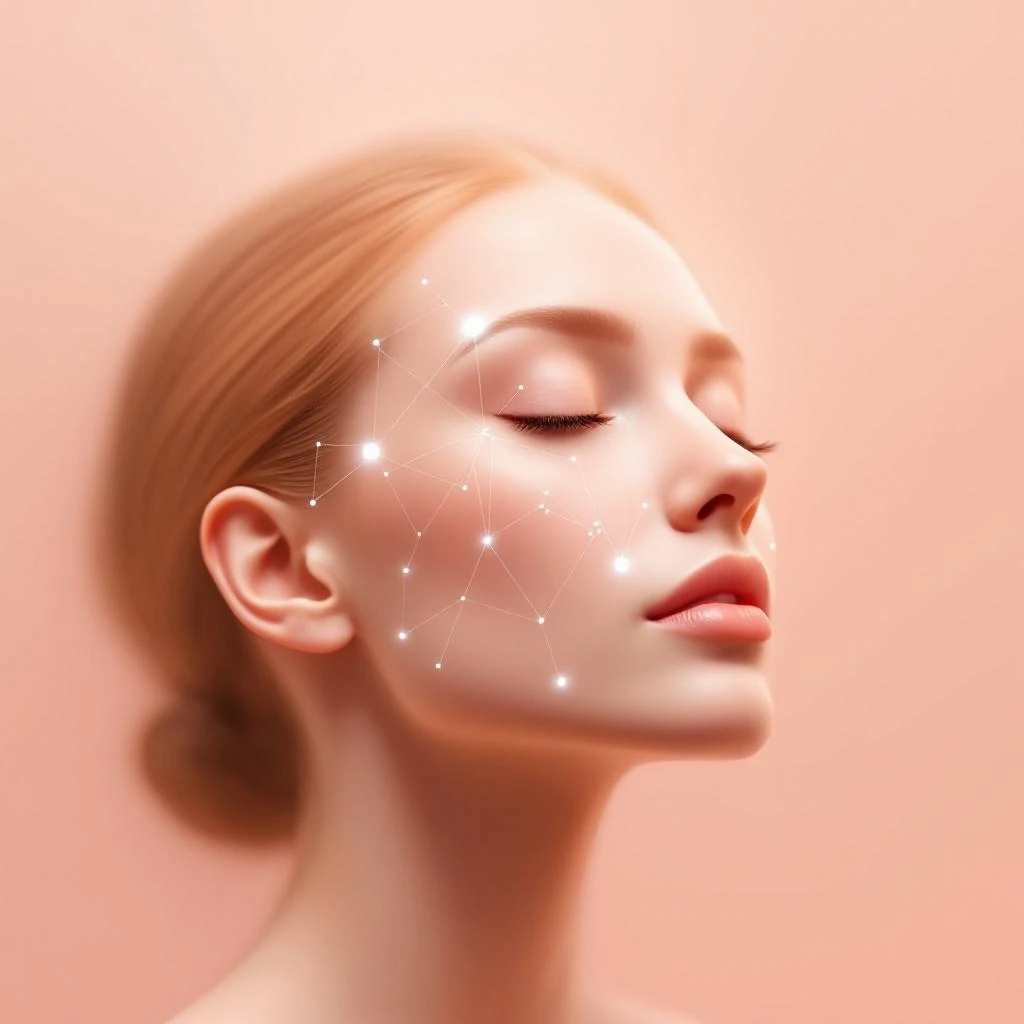
Tone evenness looks at how uniform skin colour is across the zones of the face map. Patchy pigment, redness and shadowed areas all lower it. The hydration cue, surfaced in the Hydration Check, reads the soft highlights and fine crinkling that shift with the skin's surface water content. Texture, from the Pore & Texture analysis, estimates how evenly light breaks across the surface in each zone. All three feed into the overall score and are stored in your history so you can compare this month with last.
Now the honest part. Radiance is the most lighting-sensitive thing a camera can measure, and a selfie can fake dullness that is not there. Warm indoor bulbs give skin a sallow cast that reads as uneven tone. Overhead light drops shadows under the eyes and cheekbones. Light from behind flattens the highlights the hydration cue depends on. Low light adds sensor grain that the texture reading can mistake for roughness. For a fair reading, face a window in daylight with no makeup, hold the phone at eye level and use the same spot each time. Consistency matters more than perfection, because the useful information is in the trend.
Beeuty also cannot see circulation, iron levels, sleep debt or cell turnover rates. It estimates what your skin looks like, in cosmetic terms, from one photo. It never diagnoses, and if your skin has changed in a way that worries you, a dermatologist or GP is the right next step, not another scan.
Sources
- How to safely exfoliate at home, American Academy of Dermatology
- Sunscreen and sun safety, NHS
- Why lack of sleep is bad for your health, NHS
- Does poor sleep quality affect skin ageing? (2015), PubMed
See what your glow is actually made of
Beeuty reads tone evenness, hydration and texture from one selfie, shows which one is dragging your radiance down, and tracks the change month by month.