Why men's skin behaves differently (and why that changes very little)
Men's skin is, on average, thicker than women's, produces more oil, and gets scraped with a blade several times a week. Those three facts explain most of what men notice in the mirror: shine by lunchtime, blocked pores, redness after shaving, and lines that arrive late and then all at once.
The thicker skin and higher oil output are driven largely by androgens. More oil means slower visible ageing in the early years, but also more congestion, larger-looking pores and a greater chance of adult breakouts. Shaving removes the top layer of dead cells every time, which is exfoliation, and a fairly rough form of it.
What does not differ is the biology that skincare acts on. A pore is a pore, UV does the same damage, and a moisturiser traps water the same way regardless of who is wearing it. The American Academy of Dermatology makes the same point: men's skin differs, but the basic elements of an effective routine are identical. The routine below is short because a short routine gets done.
Before you buy anything, find out whether you are oily, combination, dry or sensitive. Most men assume oily; many are combination or, after forty, drier than they think. Our skin type guide takes five minutes, or a Skin Vibe Check scan will estimate it from a selfie.
The three non-negotiables: cleanser, moisturiser, sunscreen
If you do nothing else, do these three. Together they take about three minutes a day and cover most of what skincare can do for appearance.
- A face cleanser, not bar soap. Once in the evening, and in the morning if you woke up oily. A gel or foaming cleanser suits oily skin; a cream cleanser suits drier or sensitive skin. Lukewarm water, twenty to thirty seconds, pat dry. Also after any sweaty workout, because sweat left on the skin feeds breakouts along the hairline and jaw.
- A moisturiser, every day, including if you are oily. Oily skin is often dehydrated skin overproducing oil to compensate. A light gel or lotion for oily and combination types, a cream for dry. Apply to damp skin within a minute or two of washing or shaving. Men who skip this step expect it to make them shinier; a well-hydrated face is less shiny by mid-afternoon, not more.
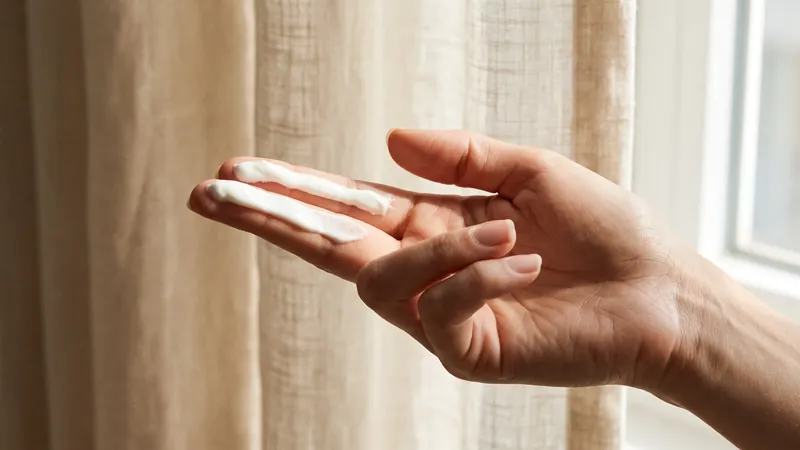
- Sunscreen, SPF 30 or higher, every morning. This step does the most for lines, uneven tone and the leathery texture sun-exposed men develop in their forties, and it is the one men skip most. A fluid or gel formula disappears on skin and does not feel like holiday sunscreen. Two finger-lengths for face and neck, plus the ears and the top of the head if hair is thinning. Our sunscreen guide covers how to pick one you will actually wear.
Shaving is exfoliation: razor burn, ingrown hairs and how to shave without wrecking your skin
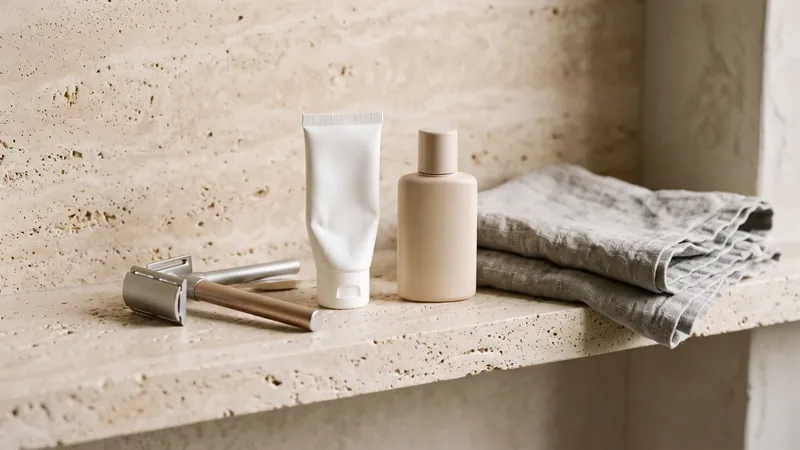
Every pass of a blade takes off hair and a layer of dead skin cells together. Done well, that leaves the face smoother than any scrub. Done badly, it leaves razor burn (red, stinging skin), razor bumps (inflamed lumps where a cut hair has curled back into the skin) and ingrown hairs that become spots. The technique dermatologists recommend is simple.
- Soften first. Shave after a shower, or hold a warm, wet cloth on the area for a minute. Wet hair cuts cleanly; dry hair tears.
- Use a lubricating cream or gel, not plain soap. Soap foam dries fast and offers little glide. If you get razor burn, choose a fragrance-free cream or gel for sensitive skin.
- Shave with the grain, light pressure, no stretching. Pulling the skin taut and going against the grain cuts the hair below the surface, which is exactly how ingrown hairs start. If bumps recur, the AAD suggests a single- or double-blade razor instead of a multi-blade one, which can cut too close.
- Rinse the blade after every stroke and change it often. A dull blade drags. Every five to seven shaves is a reasonable rule.
- Finish cool, then moisturise. Cool water, pat dry, moisturiser on damp skin. Freshly shaved skin has lost its outer layer, so it absorbs best now and also stings most from anything harsh.
If you already have an ingrown hair, leave it alone. Stop shaving that area for a few days, apply a warm compress, and it will usually release on its own. The NHS advises seeing a doctor if one becomes very painful, hot or filled with pus.
If you have a beard: the skin underneath still counts
A beard changes the problem rather than removing it. Shaving irritation disappears, but the skin underneath is now covered, warm and harder to clean. Common complaints are dandruff-like flaking, itching in the first weeks of growth, and spots at the beard line.
- Cleanse through the beard, not just over it. Work a gentle cleanser down to the skin with your fingertips; a face cleanser does the job as well as a beard wash.
- Moisturise the skin, not only the hair. Beard oils condition the hair, but a flaky face under a beard needs a moisturiser worked in to skin level. Lightweight oils such as squalane do both without blocking pores.
- Watch the borders. The neckline and cheek line are where stubble, collar friction and trapped oil meet. If spots cluster there, treat that strip like shaved skin and keep the trimmer blades clean.
- Sunscreen still applies. A dense beard shields the chin a little; the cheeks, nose, forehead and ears are fully exposed.
Persistent flaking with redness in the beard, eyebrows or around the nose is often seborrhoeic dermatitis, which is common in men and needs specific treatment. If a moisturiser does not clear it in a few weeks, see a pharmacist or GP rather than buying more product.
The "for men" myth: ingredients do not have a gender
The men's grooming shelf has darker packaging, words like charcoal and energising, and products that are chemically very close to the ones two aisles over. Turn the bottle round. The ingredient list is what matters, and nothing on it knows who is going to use it.
Two real differences are worth noting. Men's products are more often formulated for oilier skin, with lighter textures and a matte finish, which suits many men. They are also more often fragranced, and fragrance is one of the most common irritants on freshly shaved skin. Marketing to men is not a reason to buy a product or avoid it. The texture suiting your skin type is.
Ingredient lists are written in descending order of concentration, so the first five or six names tell you what you are mostly paying for. Our guide to reading a skincare ingredient list shows how to spot a real active, a token one and a fragrance in disguise. Beeuty's Ingredient Check can read a label from a photo and flag the ones that matter for your scan.
If a moisturiser from the unisex shelf has the texture and ingredient list you need, buy that. Sunscreen in particular is worth choosing on feel alone, because the one you enjoy is the one you will wear.
When to add a fourth step: salicylic acid for breakouts, retinol for lines
Give the three-step routine six to eight weeks first. If your skin is calm and a specific complaint remains, one targeted evening ingredient is the next move. One, not three.
| Criteria | Salicylic acid (BHA) | Retinol |
|---|---|---|
| Add it if | Blackheads on the nose, blocked pores, spots along the jaw and hairline, oily shine | Fine lines around the eyes and forehead, rough or dull texture, sun damage, past thirty |
| Strength | 0.5 to 2% leave-on, applied to the T-zone or breakout areas only | Start at 0.1 to 0.3%, pea-sized amount for the whole face |
| Frequency to start | Two evenings a week, build to every other night if comfortable | Two evenings a week, build slowly over two to three months |
| Shaving | Skip it on shaving nights if your skin is sensitive | Shave in the morning, not on retinol nights; expect more razor burn in the first month |
| Timeline | Visible change in blackheads in three to six weeks | Texture in two to three months, lines in six months or longer |
Both make skin more sun-sensitive, one more reason morning SPF is not optional. Read the salicylic acid guide or the retinol beginner's guide before you start, and do not run both on the same night. If your main issue is oiliness overall rather than spots, the oily skin routine explains which textures and ingredients actually reduce shine.
Painful, deep spots that leave marks, or acne across the back and shoulders, are a reason to see a dermatologist rather than add more over-the-counter steps.
The mistakes that undo everything
- Bar soap on the face. Most bar soaps are alkaline and strip oil hard, leaving skin tight for an hour and then oilier as it compensates. The AAD singles this out as the first thing for men to change.
- Hot water. It feels like it is opening pores; it is stripping the lipids that hold water in, which is why the face feels tight and looks red afterwards. Lukewarm for washing and shaving.
- Alcohol-based aftershave. The sting is alcohol irritating skin that has just lost its outer layer. A fragrance-free moisturiser or alcohol-free balm does the job without the redness.
- Skipping sunscreen because it is cloudy, you are indoors, or you have darker skin. UVA passes through cloud and window glass and drives lines and uneven tone. Darker skin burns less easily but still develops sun damage and dark marks.
- Scrubbing. Gritty scrubs plus daily shaving is double exfoliation. A mild BHA two nights a week smooths texture with far less redness.
- Changing everything at once. If you start four products on Monday and react on Thursday, you cannot tell which one did it. One new product every two to three weeks.
If your skin is currently red, tight or stinging when you apply anything, stop the extras, keep the three basics and read our skin barrier repair guide. Persistent redness across the cheeks and nose that flushes with heat or alcohol may be rosacea, which needs a diagnosis; our redness guide explains the difference.
The three-minute template, and how to tell if it is working
Morning (about 90 seconds)
- Rinse with lukewarm water, or cleanse if you are oily or shaved
- Shave if it is a shaving day, with the grain, then cool rinse
- Moisturiser on damp skin
- SPF 30 or higher, two finger-lengths, including ears and neck
Evening (about 90 seconds)
- Cleanse
- Optional fourth step on two or three nights a week: BHA on breakout zones, or retinol for the whole face, never both
- Moisturiser
No toner, no eye cream, no serum unless you have a reason. If you train in the evening, cleanse afterwards.
How to know it is working. Skin changes slowly and memory is a poor judge. Give any change eight weeks, then look for four things: less shine by mid-afternoon, fewer new blackheads, less redness in the hour after shaving, and a face that feels comfortable rather than tight after washing.
A selfie under the same light every couple of weeks makes the comparison fair. Beeuty scores a selfie out of 100 and tracks it scan by scan, and the routine builder turns the result into a short morning and evening plan, so you can see whether the three steps are moving the number before adding a fourth. It estimates appearance; it does not diagnose. Anything painful, spreading or changing shape belongs with a dermatologist, as does any mole or spot that itches, bleeds or changes colour, which the AAD lists as a warning sign men over fifty in particular should not ignore.
Sources
- Skin care tips for men, American Academy of Dermatology
- 6 razor bump prevention tips from dermatologists, American Academy of Dermatology
- Ingrown hairs, NHS
Find out what your skin actually needs
Beeuty scans a selfie, estimates your skin type and maps shine, pores and redness zone by zone, then builds a short morning and evening routine from the result and tracks the score over time. Free on iPhone and iPad.