Why your 20s are about prevention, not correction
In your 20s, skin is at its most forgiving. Cell turnover is fast, collagen production is still ahead of collagen loss, and most people have not yet accumulated enough sun exposure for it to show. That is exactly why the decade matters: almost every visible sign of ageing that appears later, from uneven tone to the first deeper lines, is a result of exposure that happened years earlier.
This changes what a good routine looks like. You do not need to fix wrinkles you do not have. You need to stop damage from accumulating quietly, deal with any acne that followed you out of your teens, and avoid the habits that strip the barrier and make skin reactive. Done well, skincare in your 20s is short, cheap and a little dull. That is a feature.
It also helps to know your starting point. A skin type check tells you whether you lean oily, dry or combination, and a baseline skin scan under consistent light gives you something real to compare against in a year.
Daily SPF: the highest-return habit you can build
If you take one thing from this article, take this. Ultraviolet light is the main external driver of visible skin ageing: it breaks down collagen and elastin, triggers uneven pigment and coarsens texture. In a randomised trial that followed adults for over four years, those assigned to daily sunscreen showed measurably less visible skin ageing than those who used it at their own discretion.
What daily actually means:
- Every morning, not just sunny ones. UVA, the wavelength most responsible for ageing, passes through cloud and window glass.
- SPF 30 or higher, labelled broad spectrum (or carrying the UVA circle symbol in Europe and the UK).
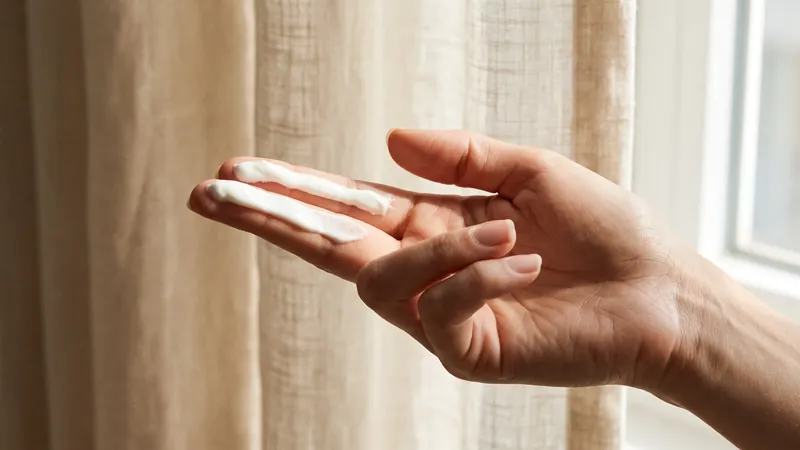
- Enough of it. Roughly two finger-lengths for the face and neck. Most people apply a third of that and get a third of the protection.
- Reapplied if you are outdoors for long stretches. On an office day, a proper morning application is a reasonable compromise.
People skip sunscreen because of texture, not ideology. A product that pills, stings the eyes or leaves a cast will not get used, and an unused SPF 50 protects less than a worn SPF 30. Try formats until one disappears into your morning; the sunscreen guide covers filters, finishes and amounts. A sun damage scan can show uneven pigment that is not yet visible to you in the mirror.
When acne does not end with your teens
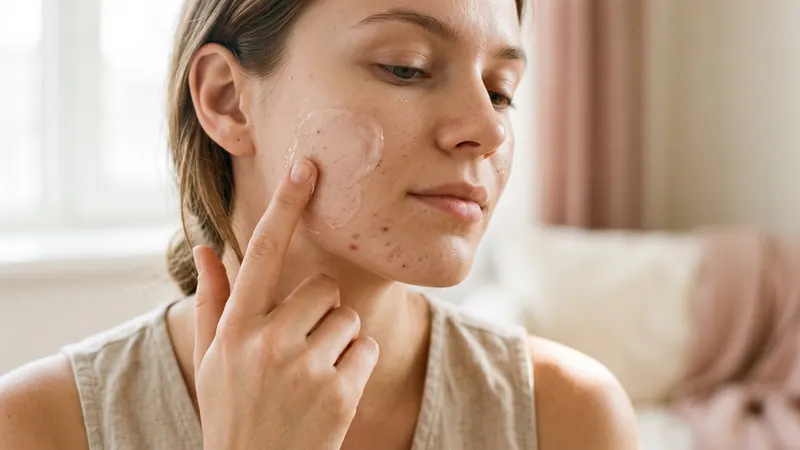
Many people reach 25 with breakouts and feel they have failed to grow out of it. They have not. Acne persisting or starting in adulthood is common, particularly in women, and it often looks different from teenage acne: fewer blackheads across the forehead, more tender spots along the jaw and chin that come and go with the menstrual cycle.
The mistake at this age is to treat the whole face as a problem. Harsh foaming cleansers, alcohol toners and a scrub three times a week make skin oilier and more reactive without touching the cause. A better approach:
- One targeted active, used consistently. Salicylic acid for blackheads and congestion, benzoyl peroxide for inflamed spots, azelaic acid if you also have redness or marks left behind. Pick one, give it eight weeks.
- Apply it to the zones that break out, not everywhere.
- Keep the rest gentle. A mild cleanser and a non-comedogenic moisturiser are what make the active tolerable.
- Do not pick. At 20 the marks fade in weeks. The habit, if it sticks, leaves scars that do not.
If spots are deep, painful, scarring or not responding after three months of a sensible routine, see a dermatologist. Prescription options work, and the earlier scarring acne is treated, the less there is to deal with later. For a complete plan, read the acne-prone routine or the overview of acne as a skin concern.
When to start retinol, and why there is no rush
Retinol is the ingredient people in their 20s ask about most, usually because something online told them that 25 is the deadline. It is not. Retinoids speed up cell turnover and, over months, support collagen production. Those effects are real and well studied, but they are equally available at 24, 28 or 35. Starting earlier does not bank extra benefit, and the main cost of starting too early is simple: a year of flaking and irritation on skin that did not need it yet.
A sensible way to think about it:
- Early 20s: optional. If acne is the issue, a retinoid may be part of the treatment anyway, and that is worth doing. If not, sunscreen will do more for your 40-year-old self than retinol will.
- Mid to late 20s: a reasonable time to introduce a low-strength retinol or retinaldehyde, two nights a week, mainly to build tolerance slowly while nothing is urgent.
- Any age: never during pregnancy or while trying to conceive, and never alongside a new exfoliating acid in the same week.
When you do start, start lower and slower than feels necessary. The retinol beginner's guide covers strengths, the buffering trick and what the first six weeks feel like.
Introduce retinol, or any active, on its own and give it a month before adding anything else. If your skin reacts, you will know what caused it. The what not to mix guide explains which pairs genuinely clash.
Avoiding the ten-step trap
Your 20s are also when most people buy the most skincare they will ever own. Ten-step routines look like diligence. In practice they cause more problems than they solve, for three reasons.
First, irritation adds up. Each product carries its own fragrance, preservatives and actives, and a barrier that is coping with ten of them twice a day is rarely calm. Second, you cannot tell what is working. If your skin improves, which of the ten did it? If it breaks out, which one is to blame? Third, long routines do not survive. The product you apply every day for a decade matters far more than the one you use for six enthusiastic weeks.
A simple test: if you cannot say in one sentence what a product is for, you do not need it. The morning and evening routine guide lays out the full possible order so you can see which steps are optional. Most are.
Where to spend and where to save
Skincare pricing has almost nothing to do with effectiveness. The ingredients that have the best evidence are also among the cheapest. If money is limited, and in your 20s it usually is, this is the order to fund.
| Priority | Product | Why | What to look for |
|---|---|---|---|
| 1 | Sunscreen | The only step with evidence for preventing visible ageing. Buy the one you will wear. | SPF 30 or higher, broad spectrum, a texture you like enough to use daily |
| 2 | Moisturiser | Keeps the barrier intact, which keeps everything else tolerable. | Glycerin, ceramides or squalane near the top of the list; fragrance-free if you are reactive |
| 3 | Cleanser | Removes sunscreen and the day without stripping. | Low-foam, no tight feeling afterwards. Price barely matters here. |
| 4 | One active | Only if you have a specific concern to treat. | Salicylic acid or azelaic acid for breakouts, niacinamide for oil and tone, retinol later |
| 5 | Everything else | Eye creams, mists, masks, essences. | Nice if you enjoy them. None are essential. |
Notice what is not high on the list. Vitamin C, peptides and eye creams are reasonable additions later, but with a working barrier and daily SPF their marginal benefit in your 20s is small. Niacinamide is the exception: inexpensive, calm, and useful for oiliness, pores and the marks acne leaves behind.
A three-step template for morning and night
This is the routine most dermatologists would hand to a 24-year-old with no specific condition. It takes under two minutes each end of the day.
Morning
- Cleanse lightly or just rinse. Oily skin may want a gentle gel; dry skin is often better with water alone.
- Moisturise with something matched to your skin type. On oily skin a light gel-cream is enough; some people fold this step into a moisturising sunscreen.
- Sunscreen, two finger-lengths, including neck and ears.
Evening
- Cleanse properly. A single thorough cleanse with a gentle product is enough for most people; double cleanse only for heavy makeup or very water-resistant SPF.
- One active, if you need one. Salicylic acid or azelaic acid for breakouts, niacinamide for oil and marks, retinol two nights a week once you have decided to start. Not all of them, and not every night.
- Moisturise. Slightly richer than the morning one if your skin feels tight by bedtime.
The routine is a scaffold, not a ceiling. Add a hydrating serum if your skin is dehydrated, swap in a heavier cream in winter, drop the active on nights your skin feels sensitive.
What changes between your early and late 20s
The decade is not uniform. At 21 your skin is still, for practical purposes, a late teenager's. By 28 most people notice a few shifts worth adjusting for rather than worrying about.
- Oil production settles. The T-zone that needed blotting at 20 may be merely combination at 28. Many people need to step up from gel to cream textures without realising why their skin suddenly feels tight.
- Recovery slows a little. A late night or a sunburn takes longer to disappear. This is the first hint of what the 30s bring and a good nudge to be consistent with SPF now.
- Marks linger longer. The red or brown mark a spot leaves behind might have faded in two weeks at 20 and now takes six. Azelaic acid and niacinamide help; picking makes it worse.
- Fine lines appear in expression areas, usually around the eyes when you smile. These are normal, they are not damage, and no cream removes them. Hydration makes them less visible; sunscreen stops them deepening early.
- Retinol becomes a reasonable addition for anyone who has not started, at the slow pace described above.
The useful habit across all of this is tracking rather than reacting. A scan every month or two under the same light shows whether hydration, texture and tone are holding steady, which they usually are. Treat it as a trend line rather than a verdict, and if anything on your skin is changing shape, colour or size, that is a dermatologist's job, not an app's.
Sources
- Sunscreen and prevention of skin aging: a randomized trial (Hughes et al., 2013), Annals of Internal Medicine via PubMed
- Sunscreen FAQs, American Academy of Dermatology
- Adult acne, American Academy of Dermatology
- Sunscreen and sun safety, NHS
Set a baseline while your skin is at its best
Beeuty's Skin Vibe Check gives you a 0 to 100 skin score and a zone map of visible concerns from one selfie, so you can see what is genuinely changing over the decade rather than guessing. Free on iPhone and iPad.